
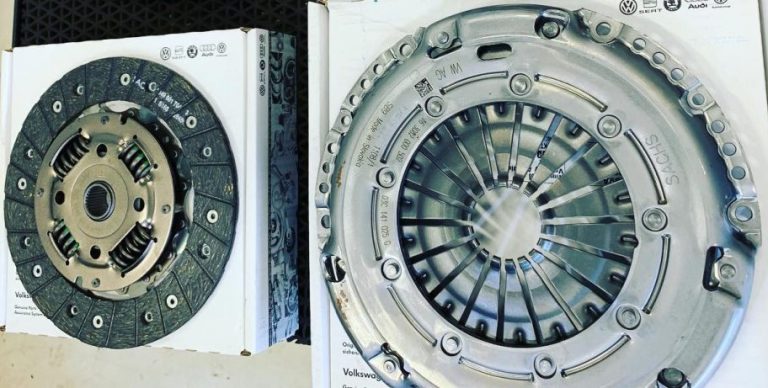
In short: typical symptoms of a worn dual-mass flywheel are a rattle or jingle at idle, judder when pulling away and a clunk when starting or switching off the engine. The flywheel is usually replaced together with the clutch.
What is a dual-mass flywheel?
The dual-mass flywheel sits between the engine and the clutch and dampens engine vibration before it reaches the gearbox. It is used especially in diesel cars and powerful petrol engines, with both manual and DSG gearboxes. The springs and bearings between the two masses wear in use.
Typical symptoms
- Rattling, jingling or clattering at idle, which may disappear when the clutch is pressed
- A clunk or knock when starting and switching off the engine
- Judder or jerking when pulling away and at low revs
- Gears engaging harshly
- Clutch slip, if the clutch is also worn
What wears the flywheel?
Driving at low revs in a high gear, frequent pulling away and heavy loads all strain the flywheel. Wear usually progresses gradually, so react to the symptoms before the fault damages the clutch or gearbox.
Replace it together with the clutch
Replacing the flywheel requires removing the gearbox, just like a clutch replacement. That is why it usually pays to replace both at the same time – so you do not pay for the labour twice. We always check the flywheel during clutch work. Read more: clutch replacement and DSG clutch replacement.
Read also
Frequently asked questions
How do I know the dual-mass flywheel is broken?
Typical symptoms are a rattle at idle, a clunk when starting and switching off, and judder when pulling away. The condition is confirmed by an inspection.
Should the clutch be replaced at the same time?
Usually yes, because replacing either requires removing the gearbox. That way the job is done only once.
Book a service or ask for a quote
Call or WhatsApp +358 40 196 8989 or email huolto@ivera.fi. Tell us your registration number and we will give you an accurate price estimate. We answer Mon–Fri 8–17 – in Finnish and English.